Aït Ben Haddou
A fortified earthen village on the southern side of the High Atlas, listed by UNESCO.
- From Marrakech
- About 160 km by road
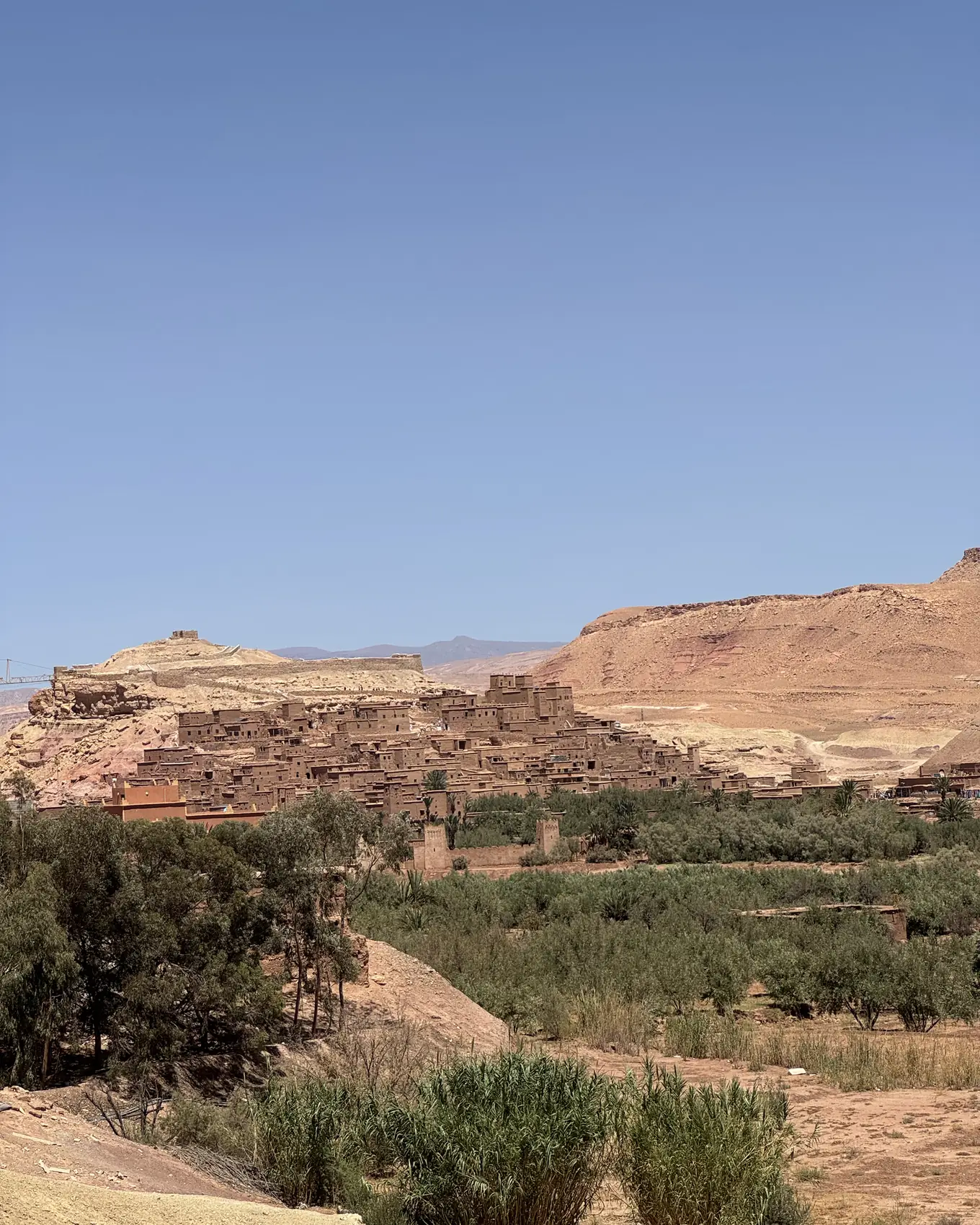
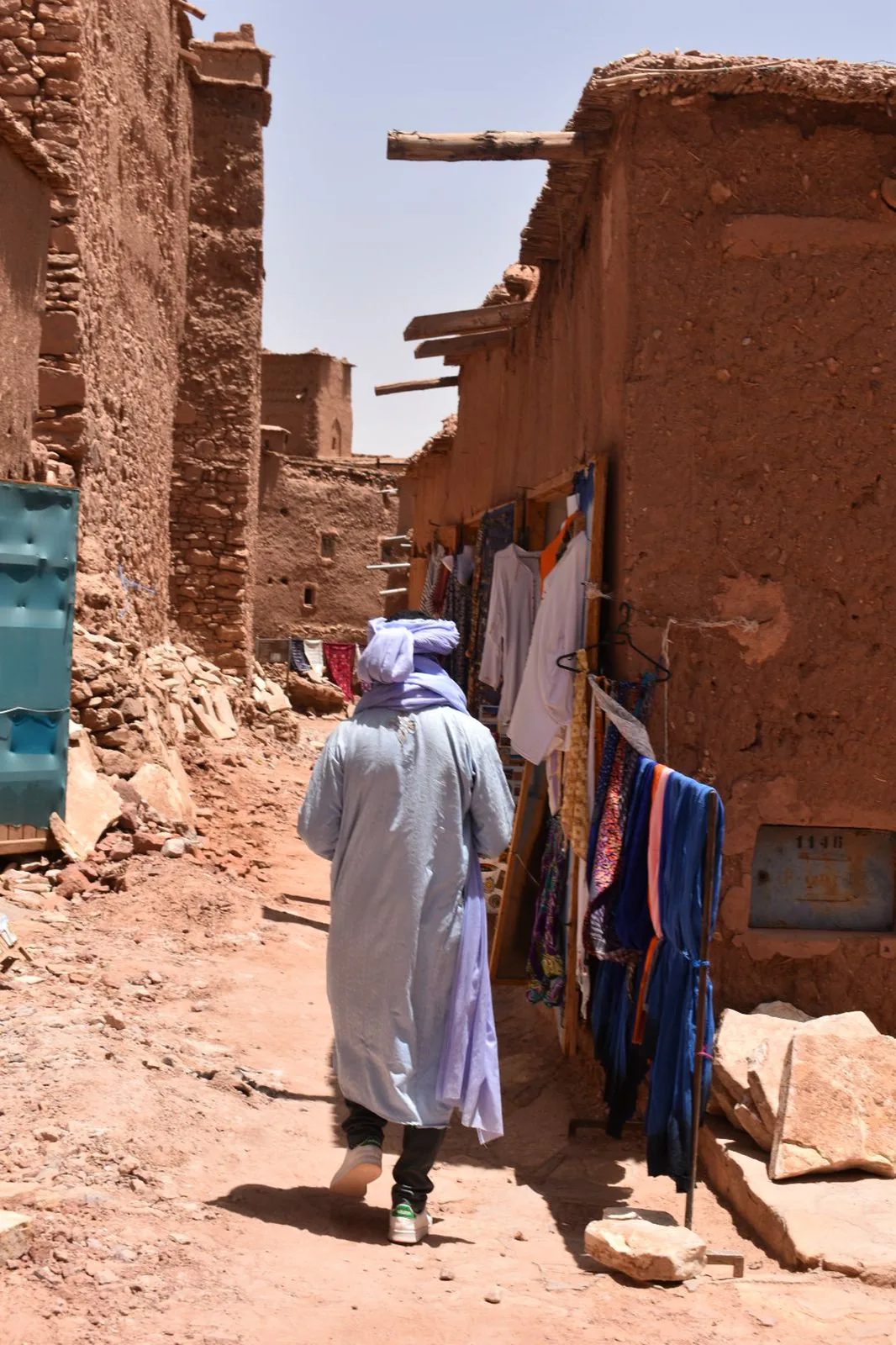
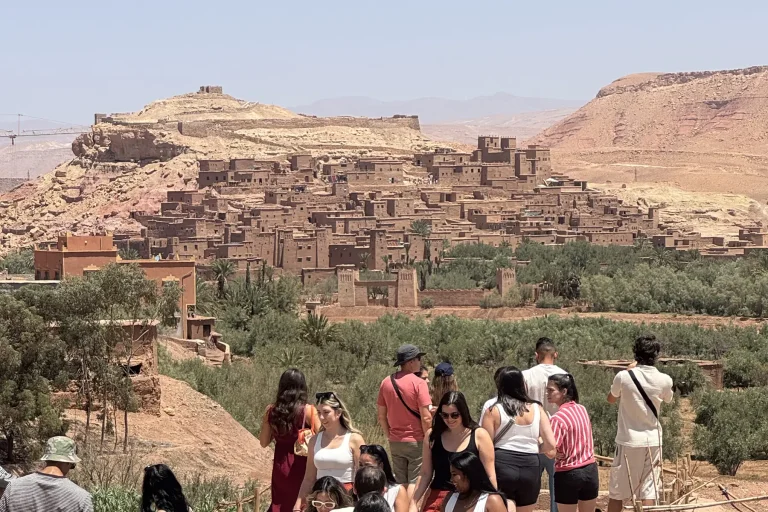
Aït Ben Haddou is a fortified earthen village, or ksar, on the southern foothills of the High Atlas in the province of Ouarzazate. Its houses climb a hillside above the Ounila river to a communal granary at the top, and it was listed by UNESCO in 1987 as an outstanding example of the earthen architecture of southern Morocco.
Highlights
- A fortified earthen village, or ksar, listed by UNESCO in 1987
- A climb through lanes and stairways to the granary at the top
- On the old caravan route between Marrakech and the south
- A favourite location for film-makers
What you see
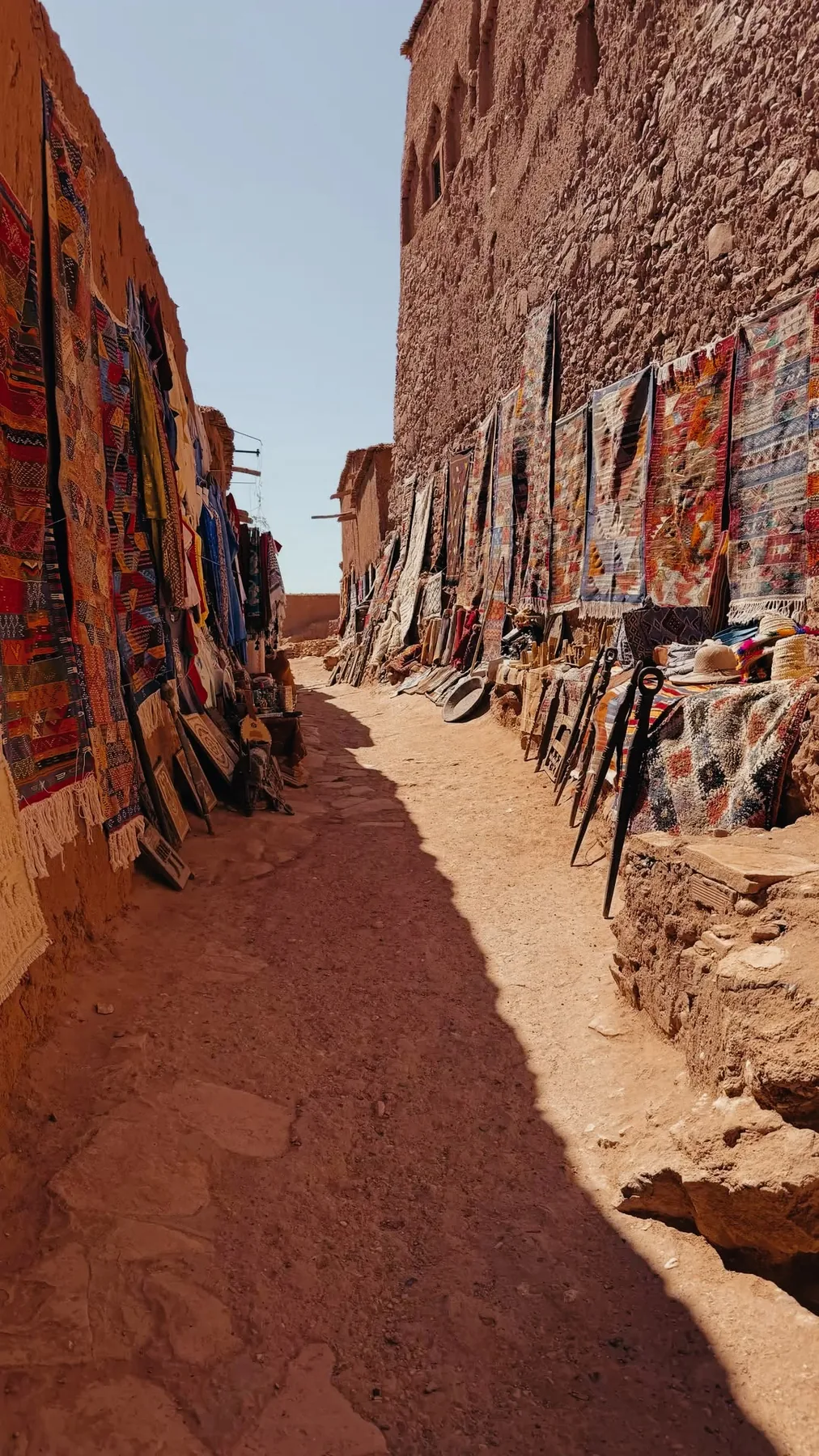
From the far bank of the river, Aït Ben Haddou reads as a single structure: walls, towers and houses built of earth and stone, rising in tiers to the crest of the hill. Up close it becomes a village of narrow lanes, gateways, small squares and stairways. At the top stands the agadir, the fortified collective granary where the community once stored its harvests and valuables.
The buildings are not as ancient as they look. Earth needs constant care, and most of what stands today dates from the seventeenth century or later, rebuilt and repaired using techniques far older than the walls themselves. That cycle of building and maintenance is part of what UNESCO recognised.
Ksar or kasbah?
The two words are often confused. A kasbah is a single fortified house, usually belonging to a powerful family. A ksar is a whole fortified village, with houses, granaries, a mosque and shared spaces enclosed together. Aït Ben Haddou is a ksar that contains several kasbah-like houses, which is why walking up through it shows how an entire community built, defended and lived within one structure.
A village on the caravan route
The ksar stands on one of the old trans-Saharan routes linking Marrakech with the south, at the point where the road over the High Atlas reaches the plain. Its position explains its fortifications. Today only a few families still live inside the old village; most of the community has moved to the newer settlement across the river.
Its silhouette is also familiar from the cinema. The ksar and its surroundings have served as a film location many times, a connection it shares with nearby Ouarzazate.
Aït Ben Haddou on our routes
Aït Ben Haddou is a stop on every Morocco Passage route that crosses the Tizi n’Tichka pass. It is the centrepiece of the Aït Ben Haddou and Ouarzazate day journey, and the first major stop on the two-day route to Zagora and on the three-day route to Merzouga.
Journeys that pass through here
Aït Ben Haddou & Ouarzazate Private Day Journey
- Marrakech
- Tizi n'Tichka
- Aït Ben Haddou
- Ouarzazate
- Marrakech
Marrakech to Merzouga Private Sahara Journey — 3 Days
- Marrakech
- Ouarzazate
- Dades Valley
- Erg Chebbi
- Marrakech
and 6 more places on the way

Marrakech to Zagora Private Desert Journey — 2 Days
- Marrakech
- Ouarzazate
- Zagora
- High Atlas Mountains
- Marrakech
and 5 more places on the way
Aït Ben Haddou or Ouarzazate?
They are close neighbours and are usually seen together, but they are different kinds of place. Aït Ben Haddou is a heritage village, a single ensemble to walk through and look at. Ouarzazate is the working town of the region, a crossroads where the roads to the Dades and Draa valleys divide. On our routes, Aït Ben Haddou is the visit and Ouarzazate is the stage that follows.
Before you visit
- Walking. Seeing the ksar properly means climbing on foot along uneven lanes and steps to the granary at the top. The views over the river valley reward the effort.
- Light. Earth architecture changes colour through the day, and the ksar is at its warmest in the morning and late afternoon.
- Heat. Summers on this side of the Atlas are hot and dry, so the cooler part of the day is the most comfortable for the climb.
Questions travellers ask
Is Aït Ben Haddou worth visiting?
For anyone interested in Morocco’s architecture or the history of the south, yes. It is the best-known ksar in the country and one of the clearest places to understand how earthen villages were built and lived in.
Why is Aït Ben Haddou a UNESCO World Heritage Site?
UNESCO listed it in 1987 as a striking example of a southern Moroccan ksar, showing the range of earthen building techniques of the pre-Saharan valleys.
Can I visit Aït Ben Haddou in a day from Marrakech?
Yes. Our day journey crosses the High Atlas to Aït Ben Haddou and Ouarzazate and returns to Marrakech the same day. It is a full day with a lot of mountain road.
Do people still live in Aït Ben Haddou?
A few families still live in the old ksar. Most residents now live in the newer village on the opposite bank of the river.