Marrakech
Morocco’s red city, set on a plain below the High Atlas, and the place where every Morocco Passage journey begins and ends.
- Type of place
- City
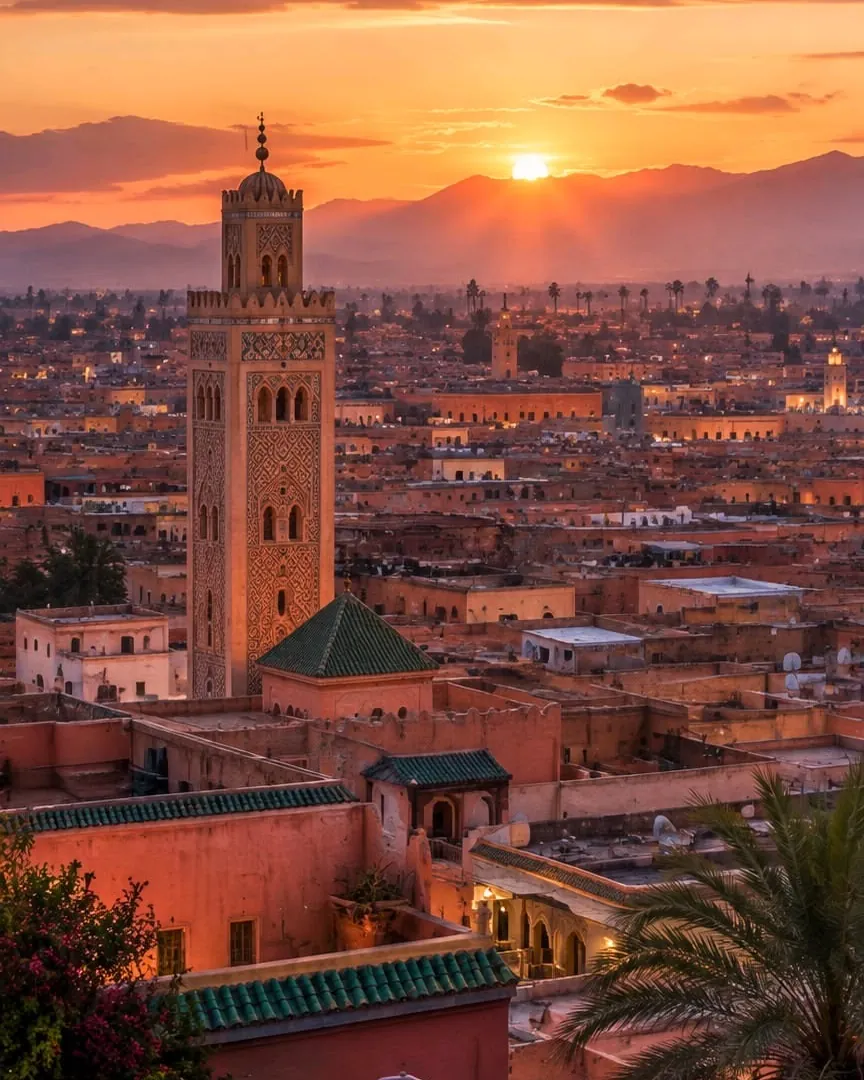
Marrakech is one of Morocco’s four imperial cities, built on the Haouz plain with the High Atlas along its southern horizon. It is a city of ochre walls, gardens and markets, and for Morocco Passage it is also a practical centre: every journey begins and ends here, from half a day in the city to three days across the mountains to the Sahara.
Highlights
- One of Morocco’s four imperial cities, founded in 1070–72
- A UNESCO-listed medina around the great square of Jemaa el-Fna
- Gardens, the Palmeraie and the modern district of Gueliz
- The starting point of every Morocco Passage journey
A city shaped by dynasties
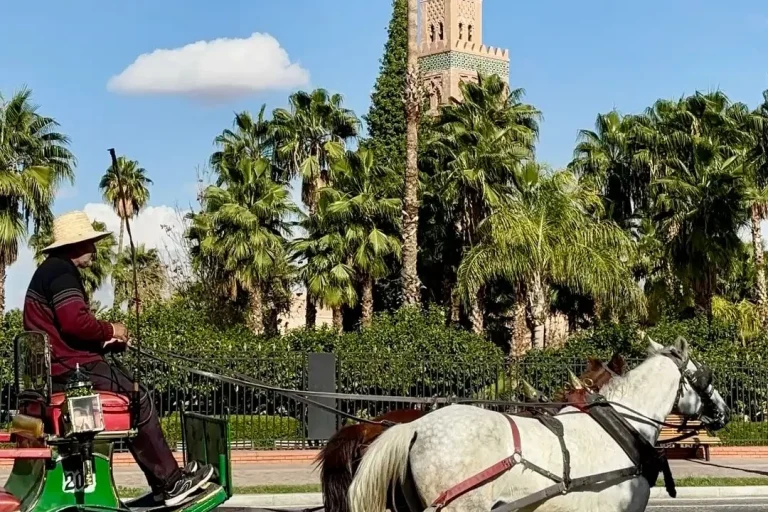
Marrakech was founded in 1070–72 by the Almoravids, a Berber dynasty that ruled from here over territory stretching into Spain. The Almohads who followed kept it as their capital, and the Koutoubia’s 77-metre minaret, still the city’s landmark, belongs to their era. Later the Saadians added a royal necropolis, now known as the Saadian Tombs, and the vast El Badi palace, whose ruins remain inside the walls.
That layering is what makes the city legible. Ramparts and gates, mosques, medersas, palaces and gardens from different centuries sit within a few kilometres of one another, and the reddish earth of the walls and buildings gives Marrakech the name by which many people know it: the red city.
The medina and the newer city
At the centre is the walled old city, the Marrakech Medina, listed by UNESCO as a World Heritage Site in 1985. Its lanes and souks run around Jemaa el-Fna, the square whose storytellers, musicians and performers were among the first traditions UNESCO recognised as intangible cultural heritage.
Outside the walls the city changes character. The districts laid out in the twentieth century, Gueliz among them, have wider streets, cafés and galleries, and a more contemporary rhythm. Large gardens such as the Menara and the Agdal, and the palm grove of the Palmeraie on the northern edge, give the city room to breathe. Seeing both sides, the dense historic core and the open modern city, is part of understanding how Marrakech lives today.
Marrakech as a base
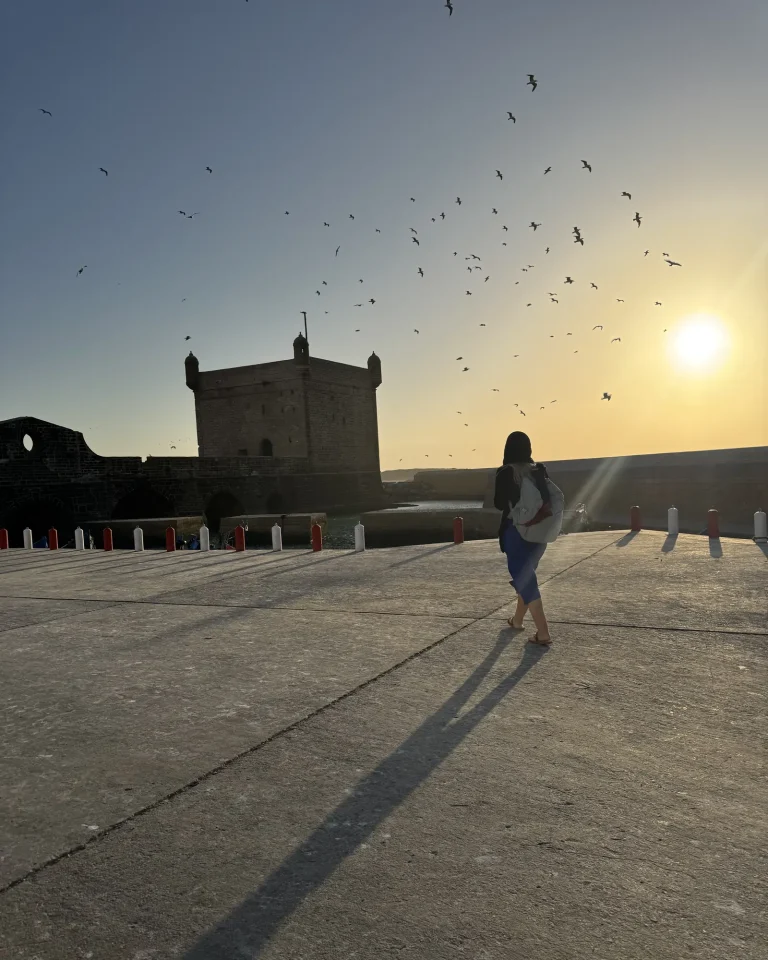
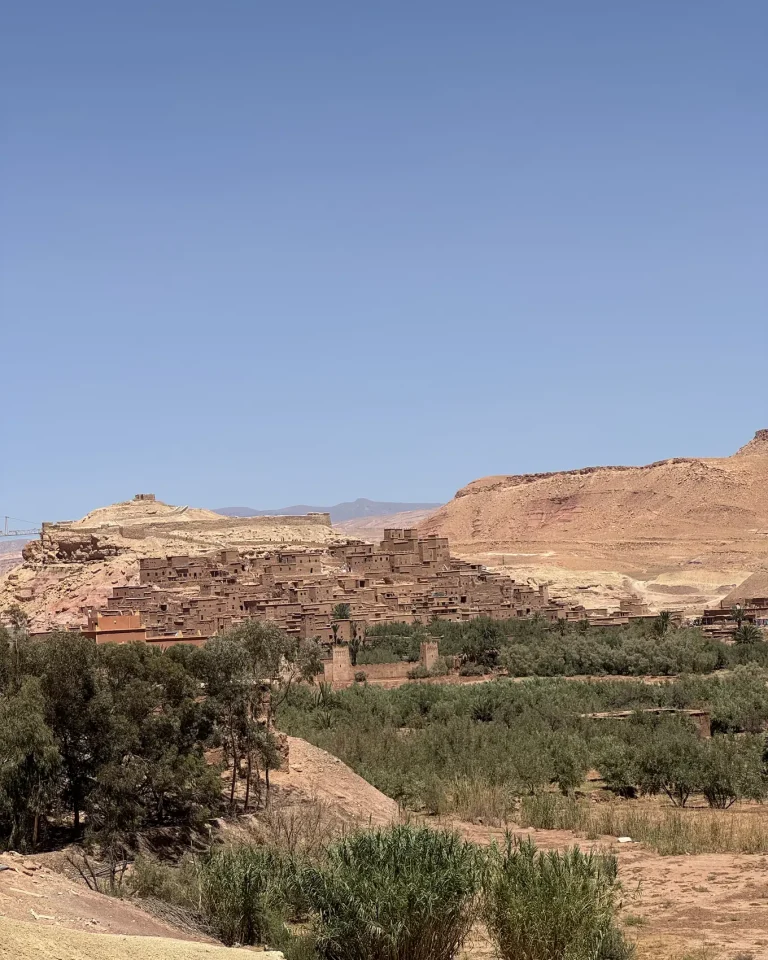
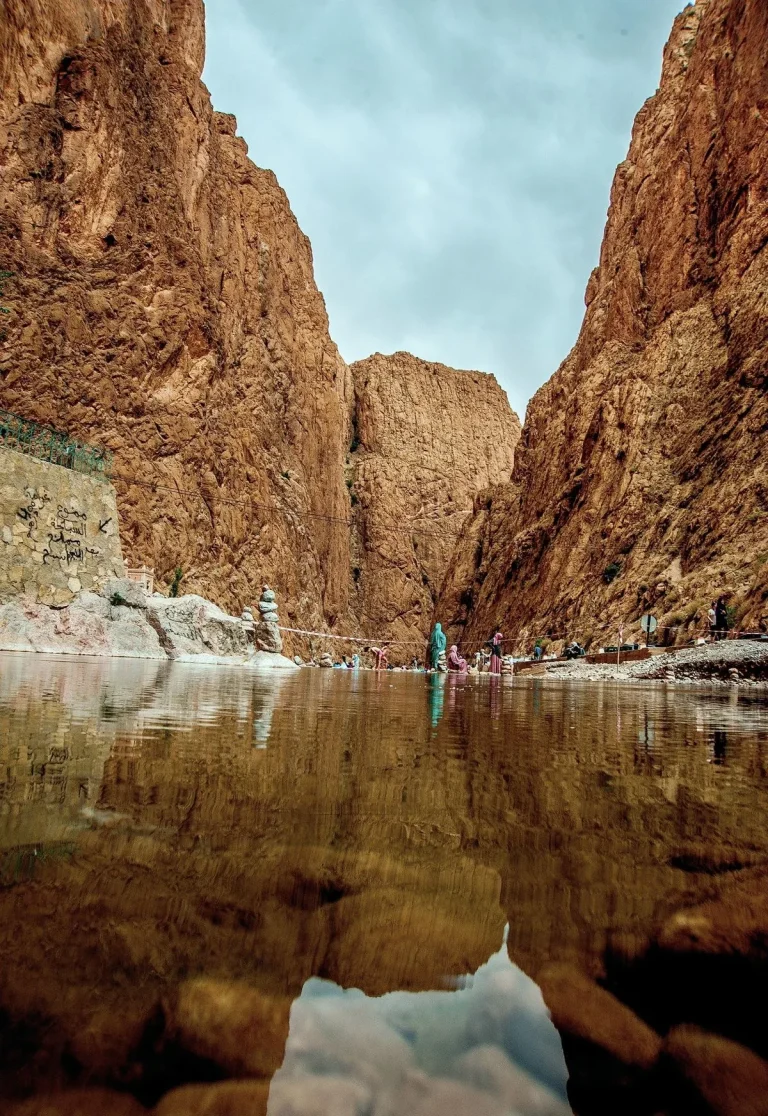
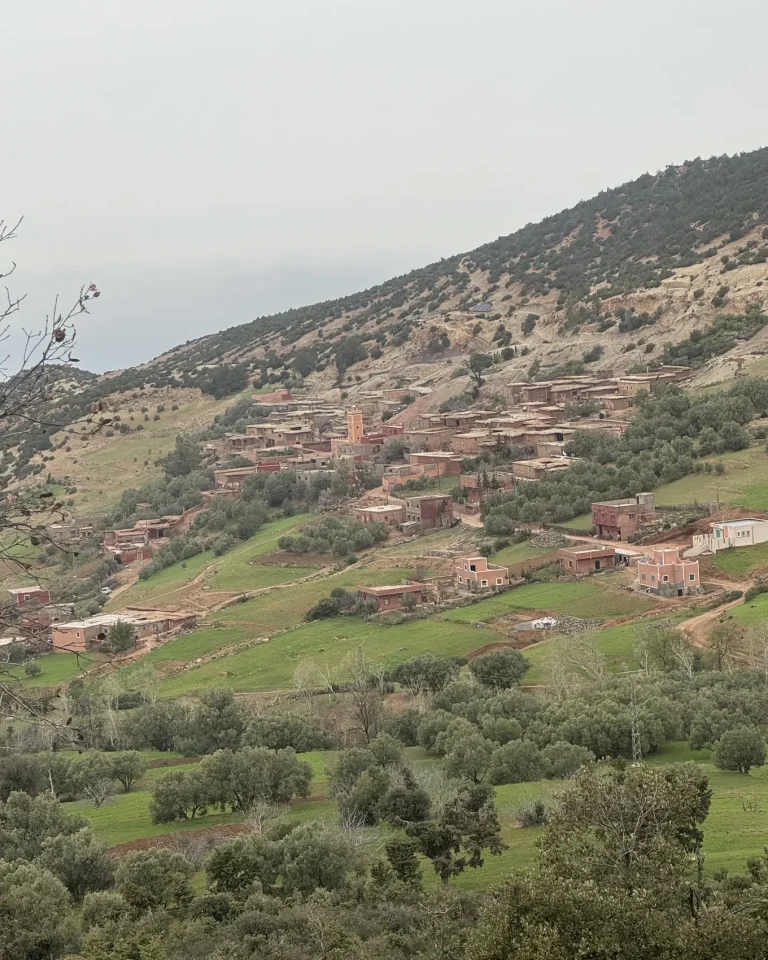
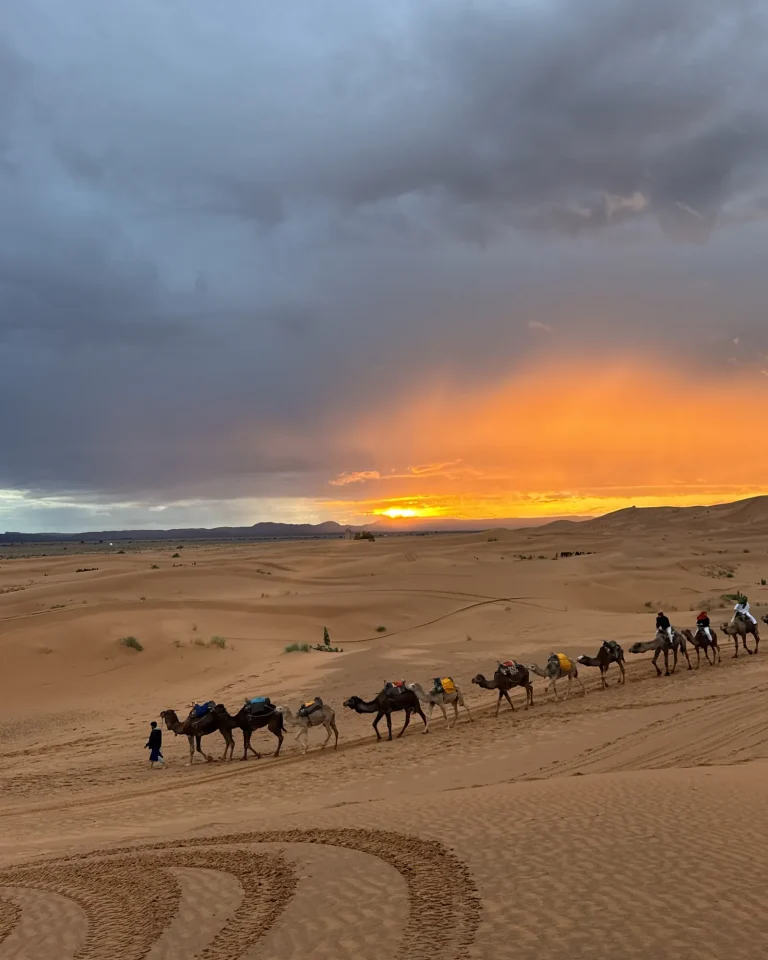
Few Moroccan cities are as well placed for travel in several directions. To the south, the foothills of the Atlas begin a short way beyond the city, with valleys such as the Ourika Valley and villages such as Imlil. To the west lies the Atlantic and the walled port of Essaouira. The stony hills of the Agafay Desert are close enough for a single night away, and the road over the Tizi n’Tichka pass leads on to Ouarzazate, the Draa Valley and the dunes of Erg Chebbi and Erg Chegaga.
All of Morocco Passage’s journeys are built from that position. Some return the same evening; others spend one or two nights away before coming back to the city.


Journeys that pass through here
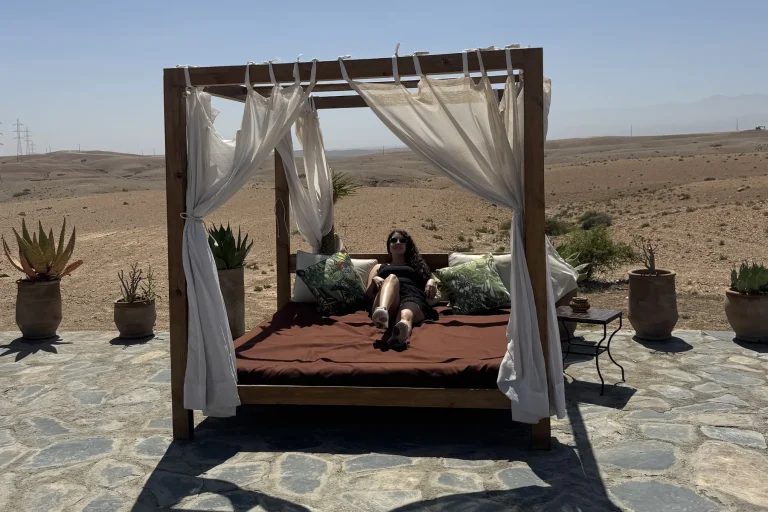
Agafay Desert Overnight Private Escape
- Marrakech
- Agafay Desert
- Marrakech
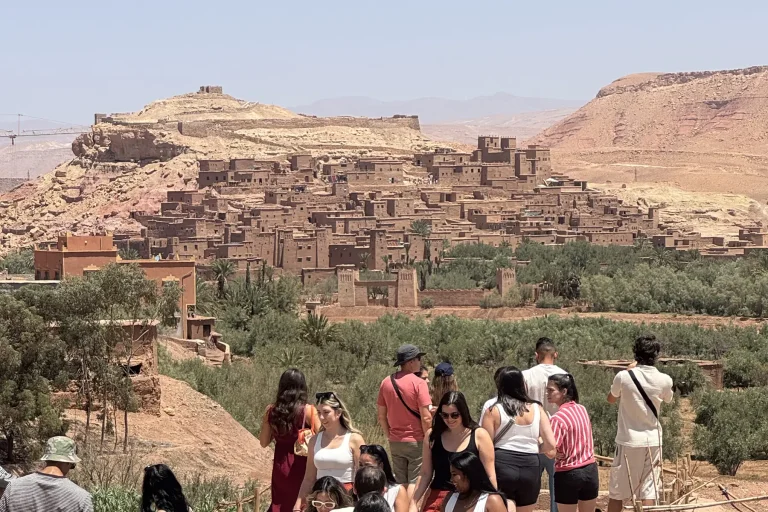
Aït Ben Haddou & Ouarzazate Private Day Journey
- Marrakech
- Tizi n'Tichka
- Aït Ben Haddou
- Ouarzazate
- Marrakech
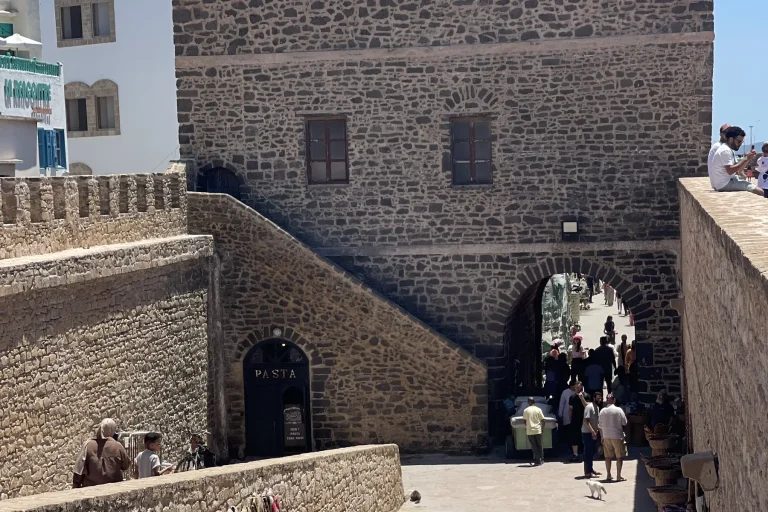
Essaouira Private Day Journey from Marrakech
- Marrakech
- Essaouira
- Marrakech

Imlil & High Atlas Private Day Journey
- Marrakech
- Imlil
- High Atlas Mountains
- Marrakech
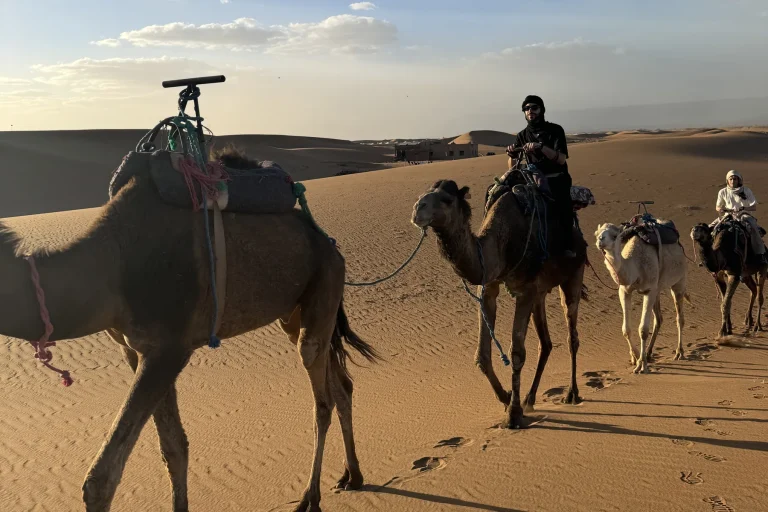
Marrakech to Merzouga Private Sahara Journey — 3 Days
- Marrakech
- Ouarzazate
- Dades Valley
- Erg Chebbi
- Marrakech
and 6 more places on the way
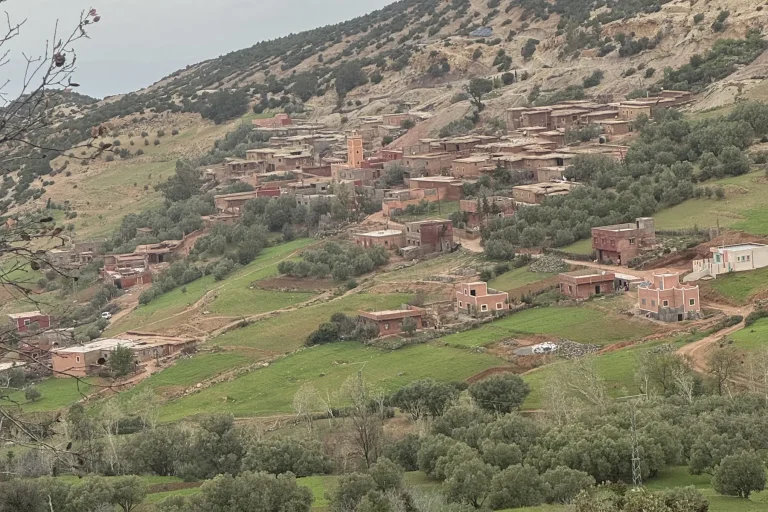
Ourika Valley Private Day Journey from Marrakech
- Marrakech
- Ourika Valley
- Marrakech

Marrakech to Zagora Private Desert Journey — 2 Days
- Marrakech
- Ouarzazate
- Zagora
- High Atlas Mountains
- Marrakech
and 5 more places on the way
Planning time in the city
Because journeys start and finish here, Marrakech often frames a trip: a few days to settle in at the start, time to slow down at the end, or both. How long to stay is a personal choice rather than a rule, and it is easier to decide once the shape of the rest of the journey is clear.
A few things are worth knowing in advance:
- Seasons. Spring and autumn are the most comfortable times to walk the city. Summer afternoons are regularly very hot, while winter days are often mild but nights can be cold.
- Ramadan. The holy month moves through the calendar each year. Daily life slows during the day and comes alive after sunset, which changes the feel of the city rather than closing it.
- Pace. The medina is best explored on foot and in shorter stretches. Pairing a morning in the old city with an afternoon in a garden or outside the walls makes the days easier.
Questions travellers ask
Is Marrakech the same as the medina?
No. The medina is the historic walled city at the heart of Marrakech. The wider city also includes the twentieth-century districts, large gardens and the Palmeraie. Most visitors spend time in both.
Why do Morocco Passage journeys start in Marrakech?
The city sits where the plains meet the High Atlas, which puts the mountains, the Atlantic coast and the roads to the Sahara within reach. Every journey in the collection begins and ends here, so a stay in the city fits naturally around them.
Can I see the desert from Marrakech?
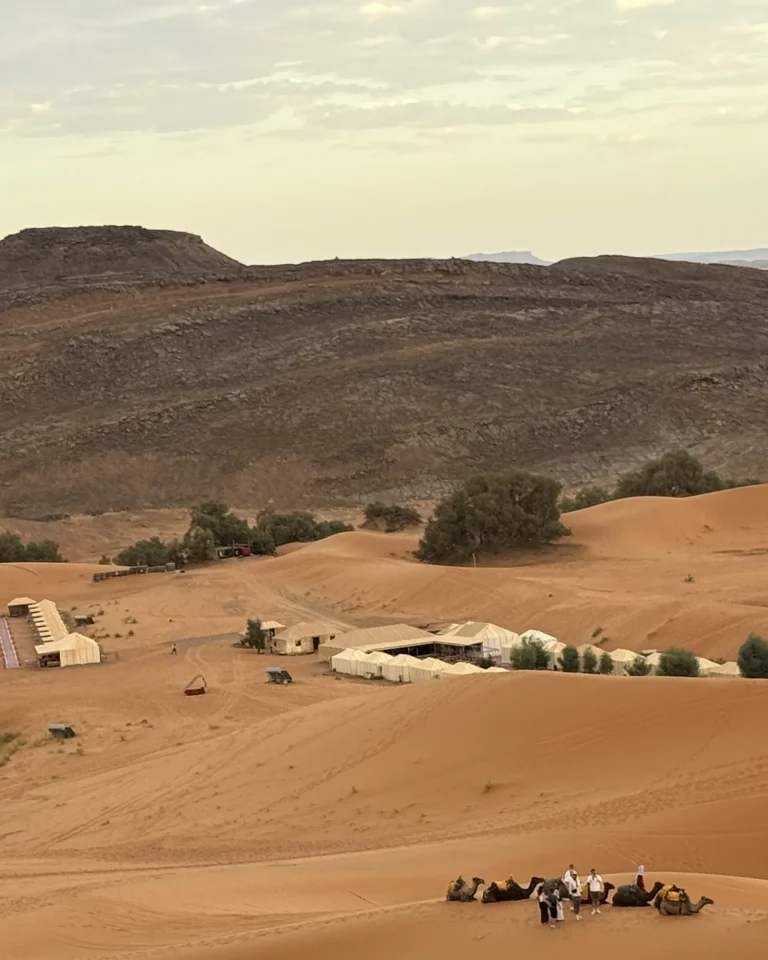
Yes, in different ways. The Agafay Desert, a landscape of bare hills rather than sand, is close enough for one night away. Reaching dunes means crossing the High Atlas: a two-day route goes down the Draa Valley to Zagora, and a three-day route continues to the sand sea of Erg Chebbi.
When is the best time to visit Marrakech?
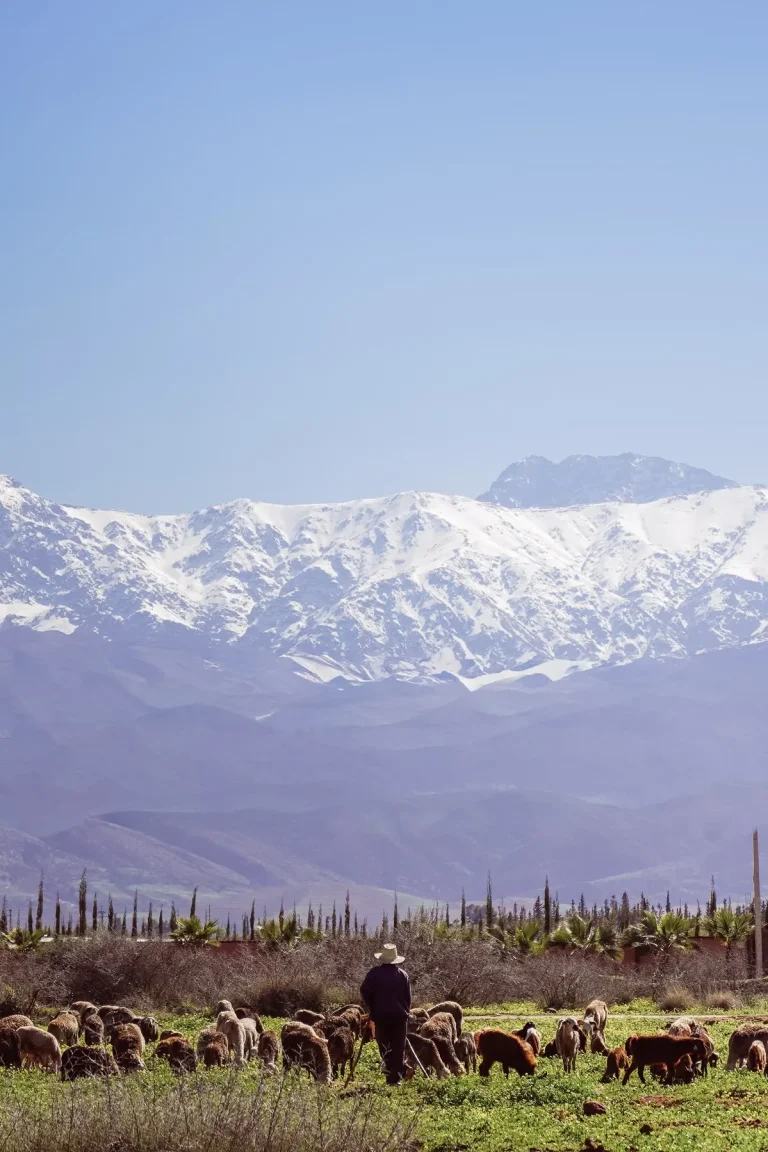
For walking and sightseeing, spring and autumn are usually the most comfortable. Summer is very hot in the afternoons, and winter brings cooler days, cold nights and, on clear days, snow on the Atlas behind the city.
Marrakech or Fes?
Both are imperial cities with medinas listed by UNESCO, and they feel very different. Marrakech is open to the plain and the High Atlas, and it is where our journeys begin and end. Fes is older, denser and more inward-looking, with a car-free medina best explored slowly. Fes is not yet part of a Morocco Passage journey; if it matters to your trip, mention it when you plan.