Fes
The oldest of Morocco’s imperial cities, whose walled medina, Fes el-Bali, is one of the largest car-free urban areas in the world.
A request, not a booking.

- Type of place
- City
Fes is the oldest of Morocco’s four imperial cities, founded at the end of the eighth century in the valley of the Fez River, in the north of the country between the Middle Atlas and the Rif. Its old walled city, Fes el-Bali, is one of the largest car-free urban areas in the world, and together with the later royal town of Fes el-Jdid it is listed by UNESCO as the Medina of Fez.
Highlights
- The oldest of Morocco’s imperial cities, founded in 789
- Fes el-Bali, one of the largest car-free urban areas in the world, listed by UNESCO
- The Qarawiyyin, traditionally dated to 859
- Marinid madrasas and the Chouara tanneries
A city of two banks
Fes began as two towns facing each other across the Fez River. Idris I founded the first in 789, and his son Idris II founded a second on the opposite bank in 809. Refugees from Córdoba settled one side and families from Kairouan the other, which is why the old city still has an Andalusian Quarter and a Qarawiyyin Quarter. The two towns were joined into one under the Almoravids in the eleventh century.
In the thirteenth century the Marinid dynasty made Fes its capital again and built a new royal town beside the old one, Fes el-Jdid, “New Fez”, begun in 1276. Much of the finest architecture in the city dates from the Marinid period that followed.
The medina on foot
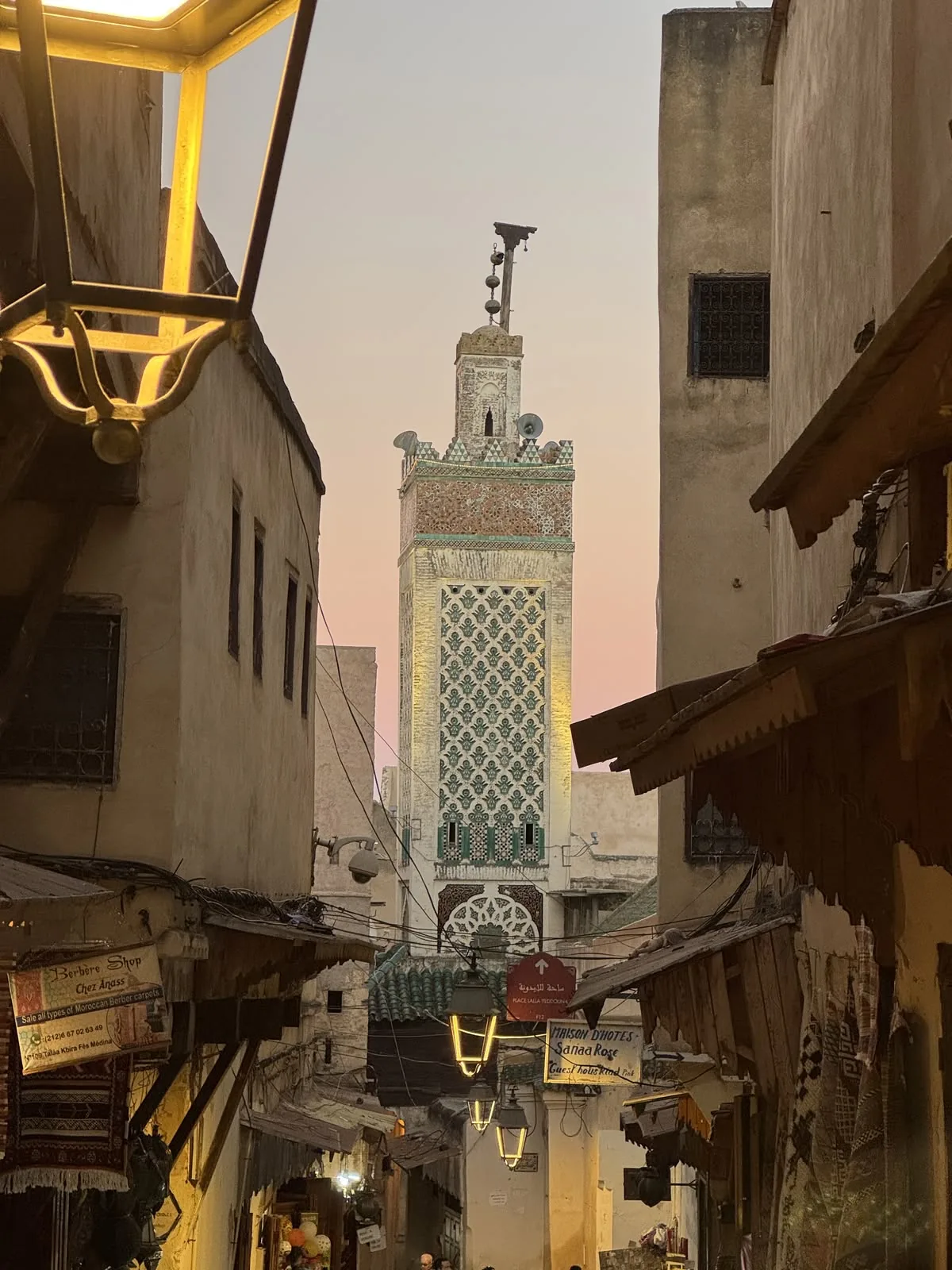
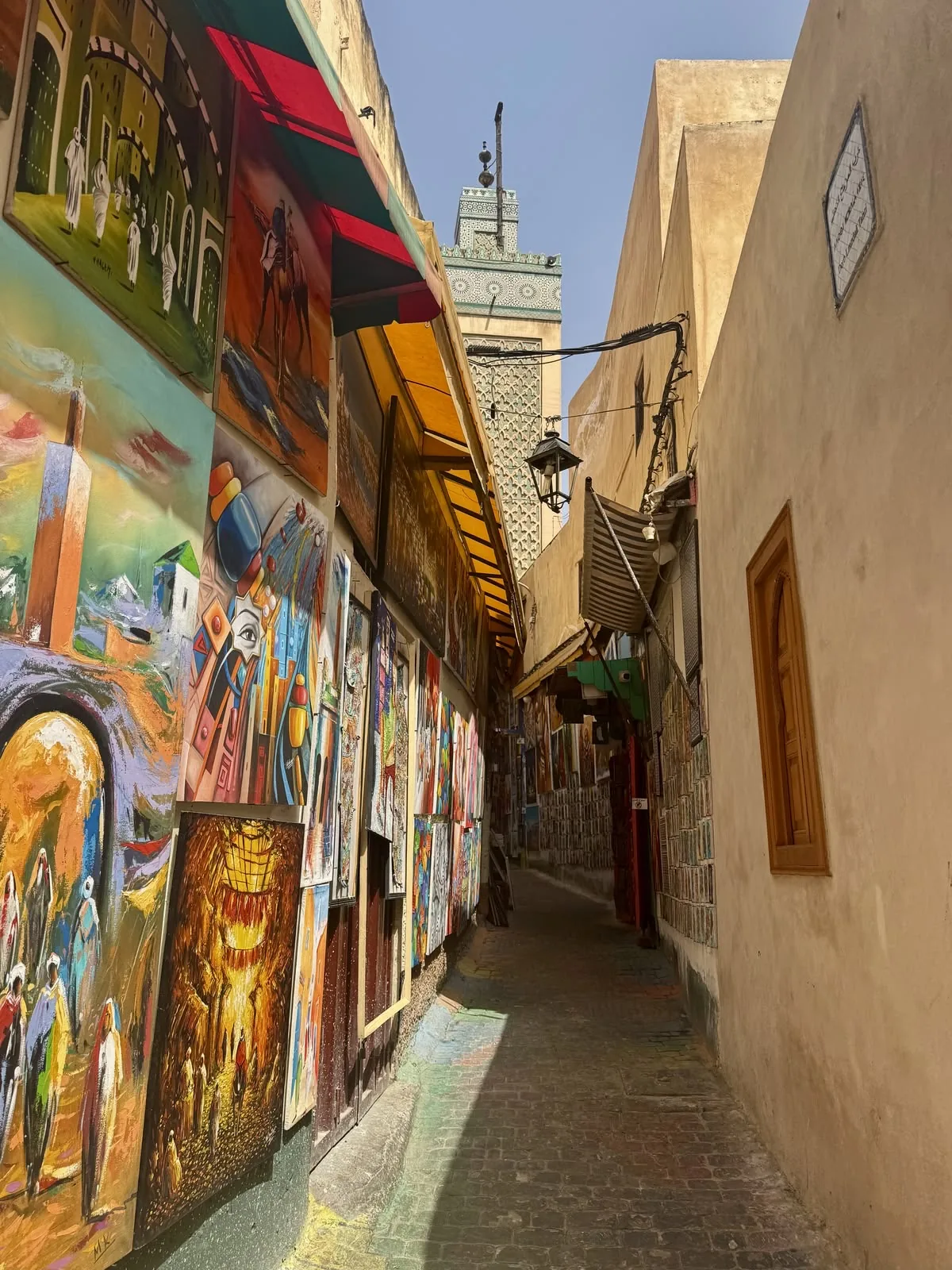
Fes el-Bali is a dense maze of lanes, stairways and covered passages, and it is entered on foot. Its streets are too narrow for cars, so goods still move by handcart and by mule. That is what gives the city its particular feeling: the sounds are of voices, hammers and footsteps rather than traffic, and every quarter has its own trades, fountains, bakeries and mosques.
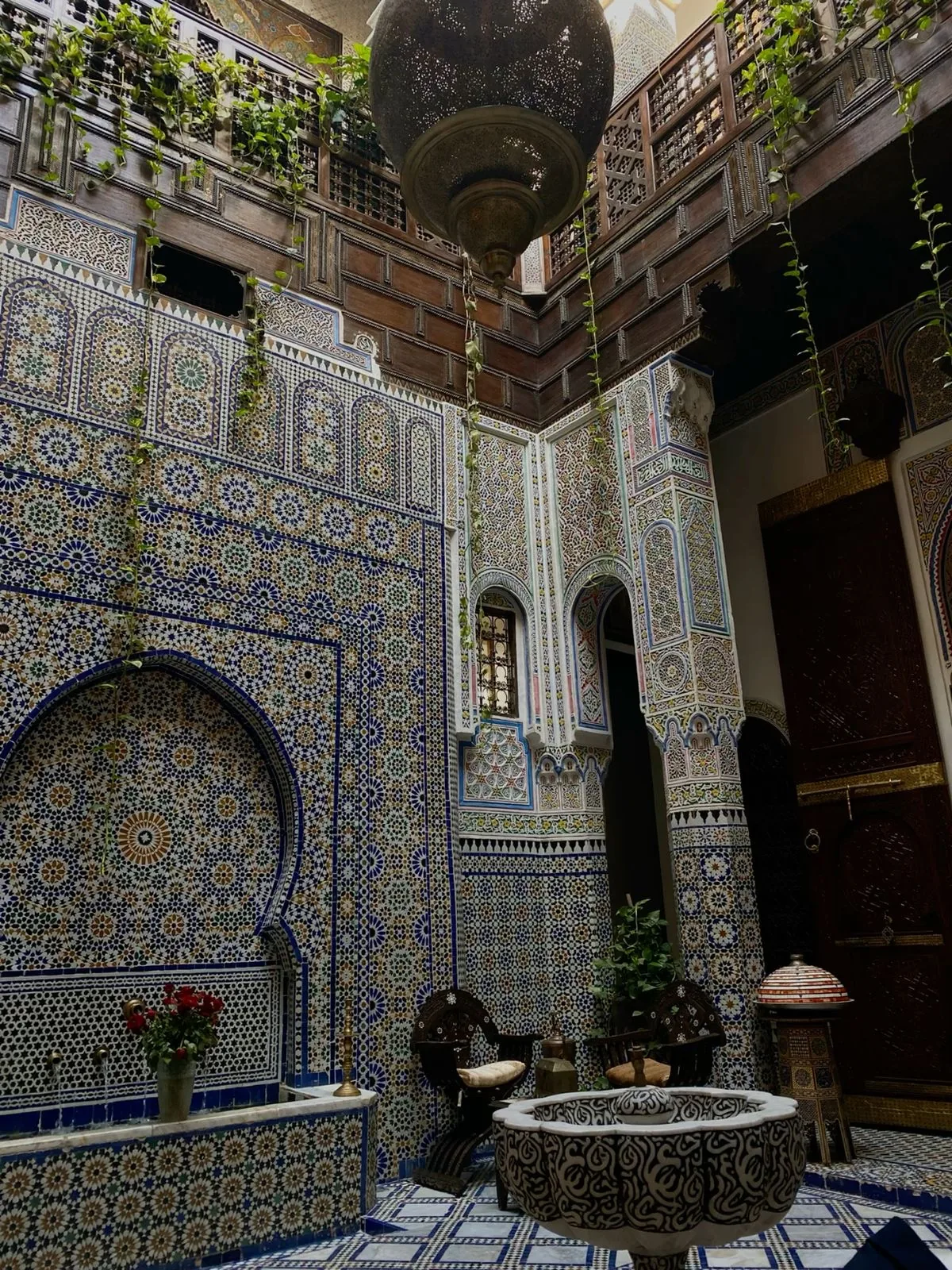
At its heart stands the Qarawiyyin, a mosque and place of learning traditionally dated to 859 and founded by Fatima al-Fihri, a woman from Kairouan. It is often described as the oldest continuously operating university in the world. Around it are the Marinid madrasas, the colleges where students once lived and studied, among them the Bou Inania and the Al-Attarine, known for their carved cedar, stucco and tilework. Nearby, the Chouara tanneries still work hides in open stone vats, as they have for centuries.
Fes or Marrakech?
The two cities are often compared, and they are different in character. Marrakech is a city of the plain, open to the High Atlas and to the south, with a medina that is lively and easy to enter. Fes is denser, older and more inward-looking: a city of scholars and craftspeople whose medina rewards a slower visit and, for a first day, a guide.
Fes on our routes
Fes is not yet part of a Morocco Passage journey. Our routes currently begin in Marrakech. If Fes matters to your trip, mention it when you plan.
When to go
Spring and autumn are the most comfortable seasons. Summers are hot inland, and winters are cool and can be wet.
Questions travellers ask
Is the medina of Fes difficult to find your way around?
It can be. Fes el-Bali is a maze of lanes with few open views, and many visitors find a guide helpful on their first day.
What is the difference between Fes el-Bali and Fes el-Jdid?
Fes el-Bali is the original medieval city, founded in the late eighth and early ninth centuries. Fes el-Jdid is the royal town the Marinids built beside it from 1276. Both are part of the UNESCO-listed Medina of Fez.
Can you drive into the medina of Fes?
No. Fes el-Bali is a car-free area, entered on foot through its gates.