The Best Time to Visit Morocco, Region by Region
When to visit Marrakech, the High Atlas, the Sahara and the Atlantic coast, season by season, with notes on Ramadan and seasonal festivals.
There is no single best month to visit Morocco, because the country covers mountains, desert, cities and two coastlines, each with its own climate. For a trip that combines Marrakech, the High Atlas and the Sahara, spring and autumn are usually the most comfortable seasons. This guide explains what each season brings, region by region.
The short answer
- Spring (March to May) brings warm days, green valleys and comfortable desert temperatures.
- Autumn (September to November) brings warm days and clear light, and it is date-harvest time in the oases.
- Summer (June to August) is very hot inland and in the desert, but pleasant on the Atlantic coast and in the mountains.
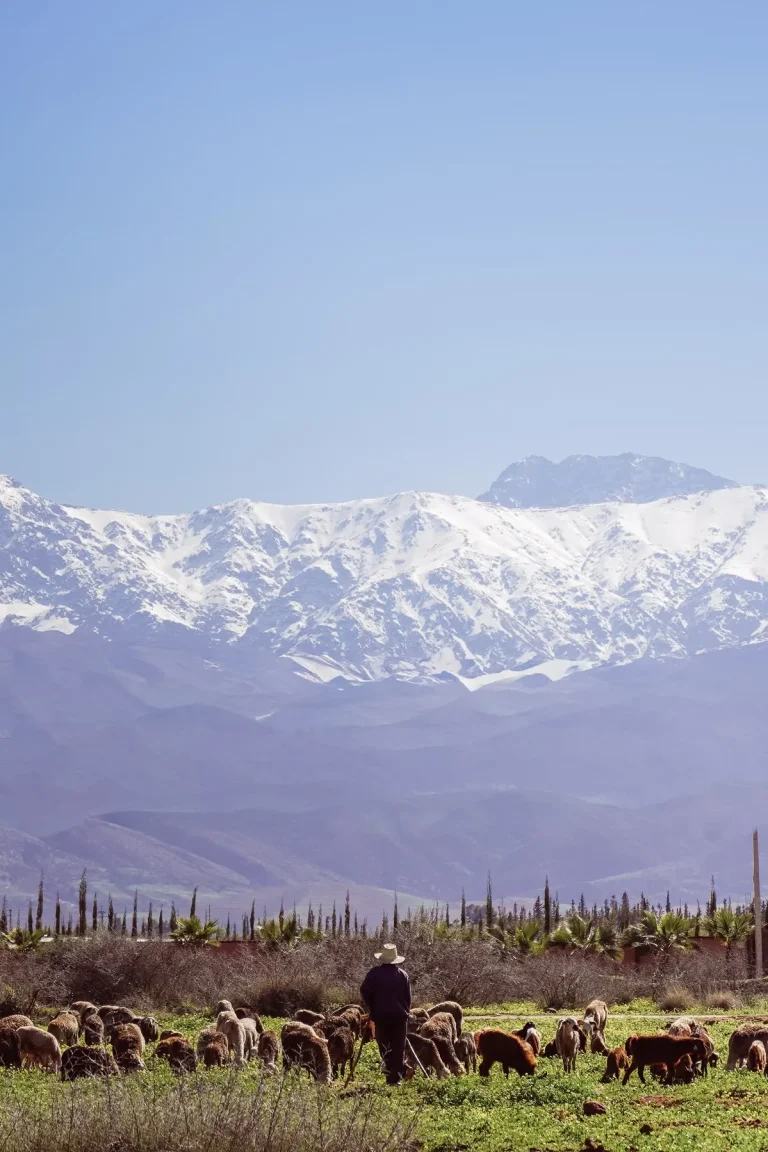
- Winter (December to February) brings mild days and cold nights. There is often snow on the High Atlas, and the desert nights are cold.
Region by region
| Region | Most comfortable | What to know |
|---|---|---|
| Marrakech and the cities inland | Spring and autumn | Summer afternoons are very hot, often well above 35 °C; winter days are mild and nights cool |
| High Atlas | Spring to autumn | Snow on the peaks in winter; mountain passes can occasionally be slowed by snow |
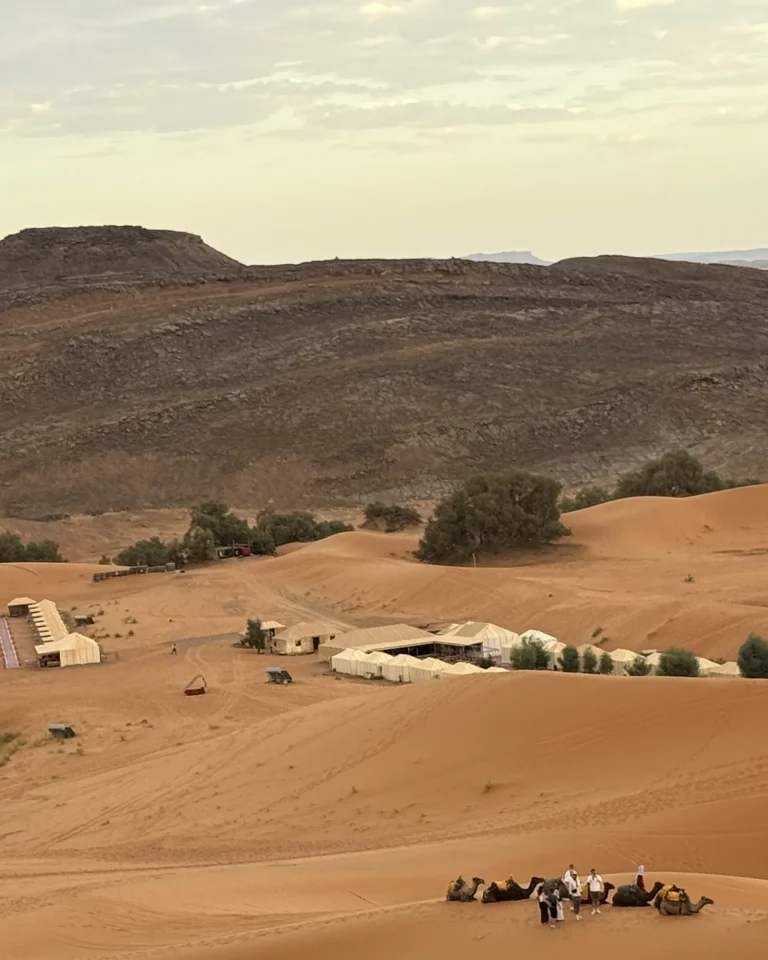
| Sahara (Merzouga, Zagora, Erg Chegaga) | Spring and autumn | Extreme heat in summer; cold nights in winter, even after warm days |
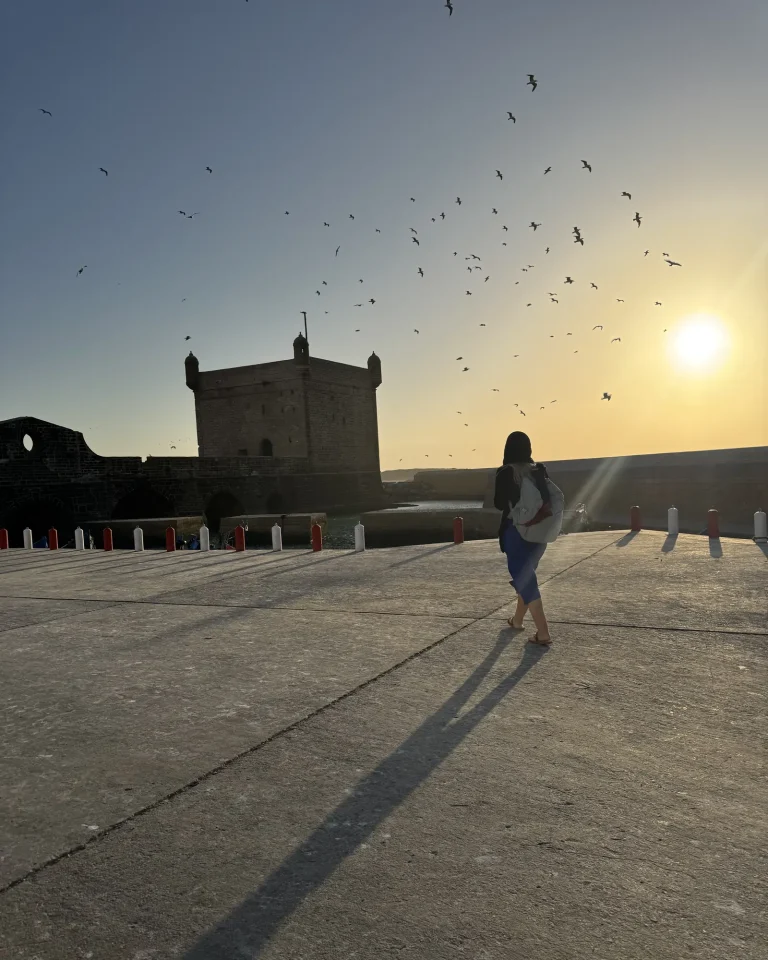
| Atlantic coast (Essaouira) | All year | Mild and often windy, especially in summer |
Marrakech and the imperial cities
Spring and autumn are the easiest times to explore on foot. In summer the heat builds through the afternoon, so mornings and evenings are the best times to be out. Winter days are often sunny and mild, but riads and old houses can feel cold at night.
The High Atlas
From late spring to autumn the mountains are at their most accessible, and their altitude makes them a welcome escape from summer heat in Marrakech. In winter the peaks are snow-covered and beautiful, and the road over the Tizi n’Tichka pass is occasionally slowed by snow.
The Sahara
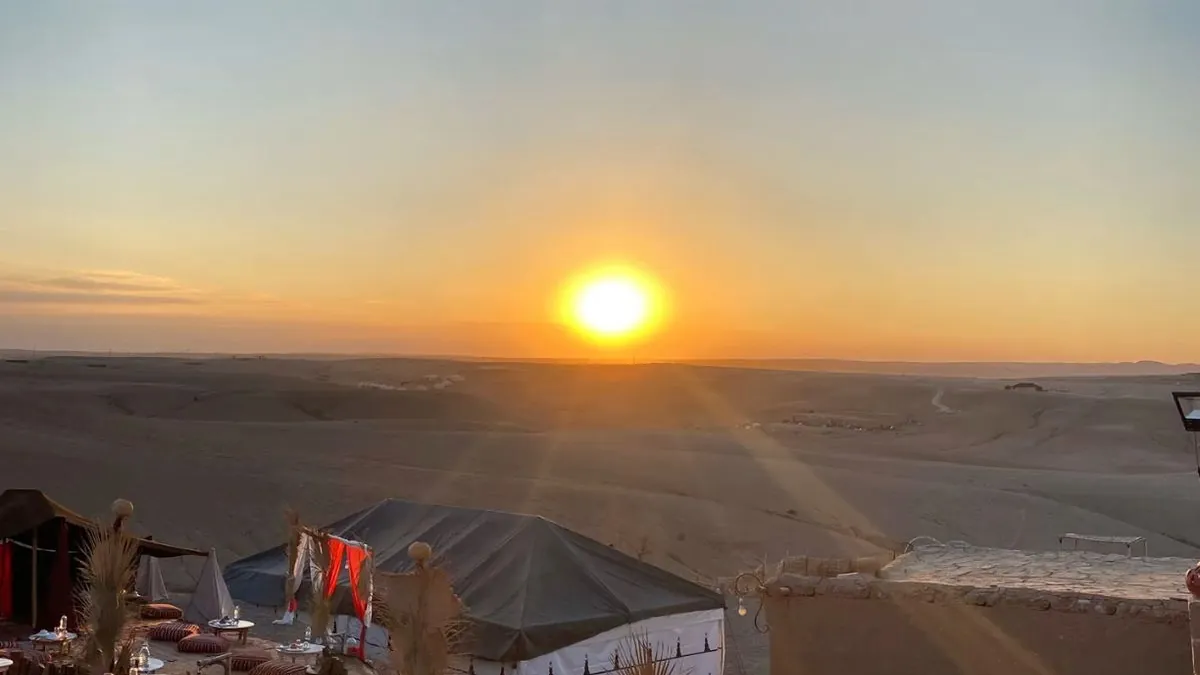
For the desert, spring and autumn are the most comfortable seasons. Summer days are extremely hot, and winter nights are cold, so warm layers matter. Whatever the season, the light at sunrise and sunset over the dunes of Erg Chebbi or Erg Chegaga is the reason to go.
The Atlantic coast
Essaouira is mild all year, cooled by the ocean and by strong, regular winds that are often strongest in summer. It is a good escape from the inland heat.
Seasonal moments
- Roses in spring. In the Valley of Roses around Kelaat M’Gouna, the roses are picked in spring, around May.
- Music on the coast. Essaouira’s Gnaoua and World Music Festival is usually held in June.
- Dates in autumn. In the palm groves of the Draa Valley, autumn is harvest time.
Travelling during Ramadan
Ramadan, the month of fasting, moves about eleven days earlier each year, so check its dates for the year you travel. Daily life slows during the day and comes alive after sunset. Visitors are not expected to fast, and in places used to travellers many restaurants and cafés stay open, but it is respectful not to eat, drink or smoke openly in the street during the day. Our guide to Moroccan customs has more on travelling respectfully.
Questions travellers ask
Is summer too hot to visit Morocco?
Not everywhere. Summer is very hot in Marrakech and the desert, but pleasant on the Atlantic coast and in the mountains. If you travel in summer, plan outdoor time for the mornings and evenings.
Is winter a good time to visit?
It can be. Days are often sunny and mild in Marrakech and the south, and the Atlas peaks are snow-covered. Bring warm clothes for the evenings, especially in the desert and the mountains.
When is the best time for the Sahara?
Spring and autumn, when days are warm rather than extreme and nights are cool rather than cold. See our guide to choosing a Sahara trip.