Zagora
A town in the Draa Valley, where the palm groves begin to give way to the desert.
- Type of place
- City
- From Marrakech
- About 350 km by road
Zagora is the main town of the middle Draa Valley in south-eastern Morocco, where the long ribbon of palm groves along the river meets the edge of the desert. For centuries it was a stage on the caravan routes south, and today it is the desert gateway closest to Marrakech on the far side of the High Atlas.
Highlights
- The main town of the middle Draa Valley, where palm groves meet the desert
- The famous roadside sign: 52 days to Timbuktu by camel
- Date palms and earthen villages along Morocco’s longest river
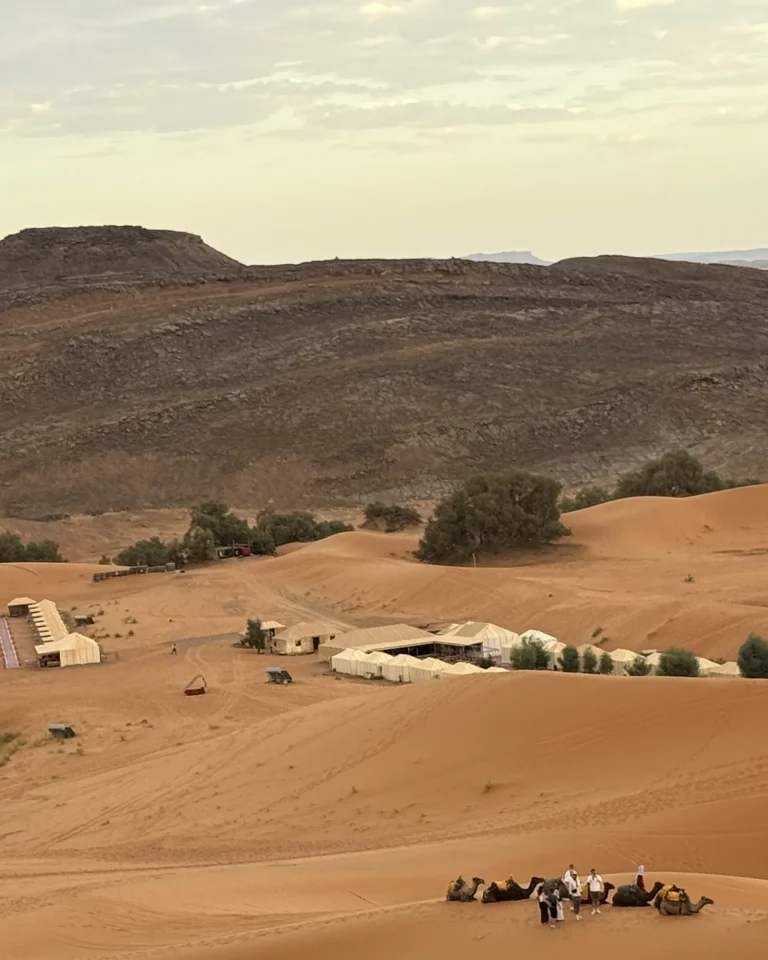
- A night with camel riding on our two-day route
A town of the Draa
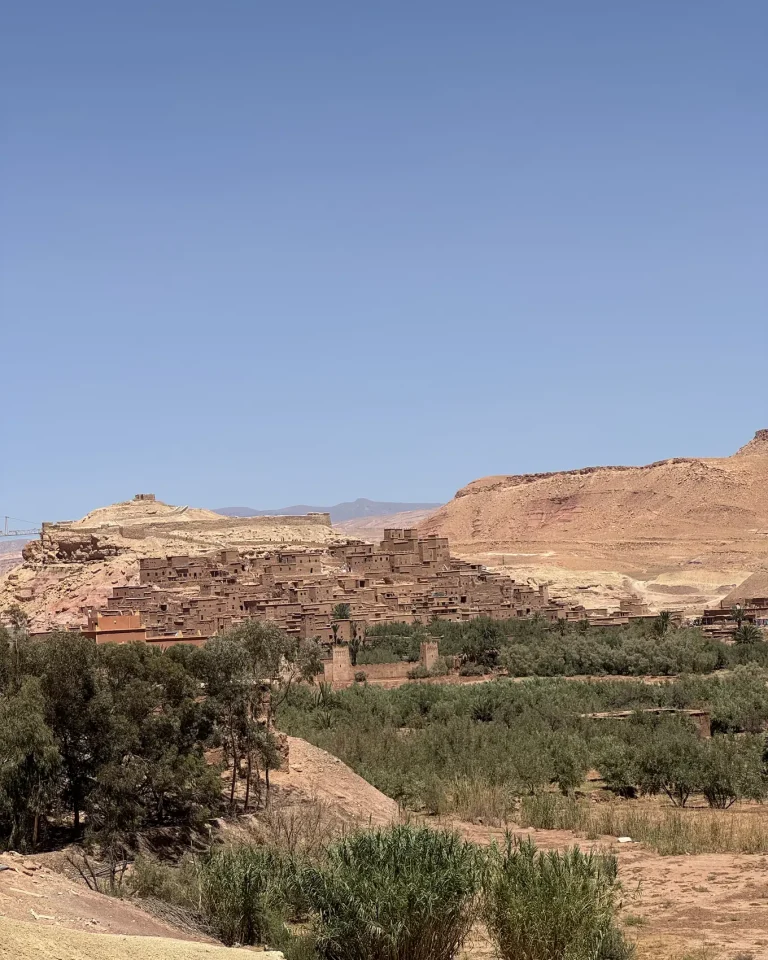
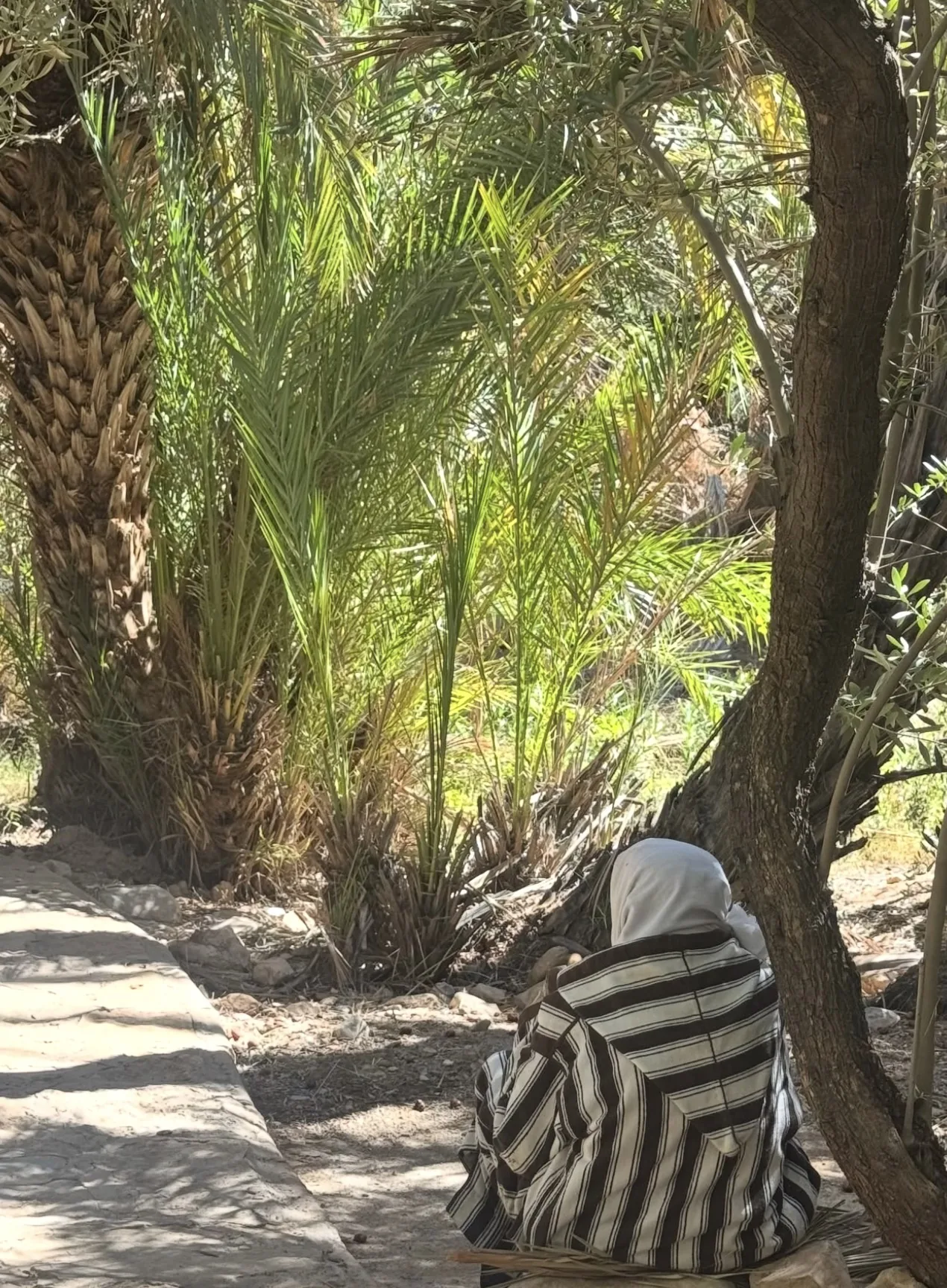
Zagora grew up as the administrative and market centre for the oases around it. The Draa, Morocco’s longest river, irrigates a line of palm groves, gardens and earthen villages that runs for many kilometres through otherwise bare country, and Zagora sits within that green corridor. Dates are the region’s emblem: the knowledge and traditions around the date palm are recognised by UNESCO as intangible heritage shared by several countries.
Beyond the town the paved road continues south for roughly a hundred kilometres to M’Hamid El Ghizlane, where the Draa Valley opens onto the Sahara proper.
The caravan memory
A well-known roadside sign in Zagora reads “Tombouctou 52 jours”: fifty-two days to Timbuktu by camel. It is a modern sign with an old meaning. Caravans once travelled between the Draa and the Niger, carrying salt, gold and other goods, and Zagora was one of its staging points.
What the desert looks like here
Zagora is not a sea of dunes in the way Erg Chebbi is. Its setting is the green line of the Draa between dry hills and stony plains, with areas of sand in the wider region. The contrast between palm grove and desert is the point, and it gives Zagora a character of its own rather than a smaller version of somewhere else.
Zagora on our routes
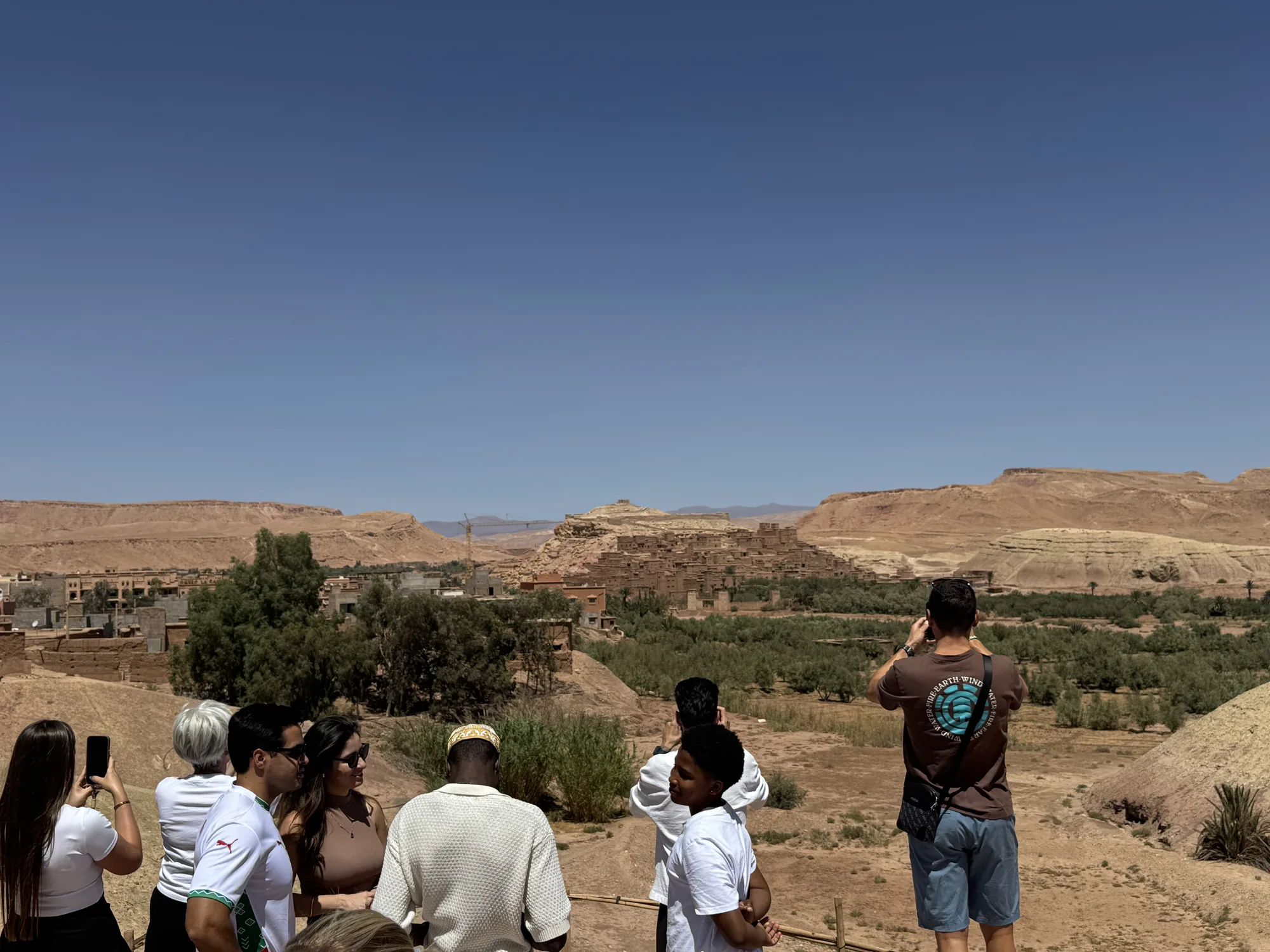
Zagora is the destination of the Marrakech to Zagora two-day desert journey. The route crosses the High Atlas, stops at Aït Ben Haddou and Ouarzazate, and follows the Draa Valley south to Zagora, where the night is spent and camel riding is part of the stop. The next day it returns through the Draa and over the mountains to Marrakech.

Journeys that pass through here

Marrakech to Zagora Private Desert Journey — 2 Days
- Marrakech
- Ouarzazate
- Zagora
- High Atlas Mountains
- Marrakech
and 5 more places on the way
Zagora or Merzouga?
These are the two classic desert destinations from Marrakech, and the choice usually comes down to time and landscape.
- Zagora is reached on a two-day route. It offers palm groves, oasis villages and the edge of the desert, with stony ground and smaller areas of sand.
- Merzouga and the dunes of Erg Chebbi are reached on a three-day route. They offer a true sand sea with high dunes, and the journey passes through the Dades Valley and the Todra Gorge on the way.
Neither is a lesser choice. Zagora suits travellers with less time, or those drawn to the oases; Merzouga suits those for whom high dunes are the heart of the trip.
When to go
The most comfortable months are roughly autumn to spring. Summers in the Draa are very hot, and winter nights are cold even after warm days.
Questions travellers ask
Does Zagora have sand dunes?
There are areas of dunes in the region around Zagora, but nothing on the scale of Erg Chebbi. The landscape here is defined more by palm groves and stony desert.
How long does it take to reach Zagora from Marrakech?
On our route, Zagora is reached at the end of the first day, after crossing the High Atlas and stopping at Aït Ben Haddou and Ouarzazate. It is a long day on the road.
Is Zagora close to Erg Chegaga?
Erg Chegaga lies further south, beyond M’Hamid El Ghizlane at the end of the Draa road, some 50 to 60 kilometres across open desert. It is not part of the two-day Zagora route.
Zagora or Agafay for one night in the desert?
They are very different trips. Agafay is a stony desert close to Marrakech, reached without crossing the mountains. Zagora means crossing the High Atlas and following the Draa to the edge of the Sahara.