Camel Riding / Trekking
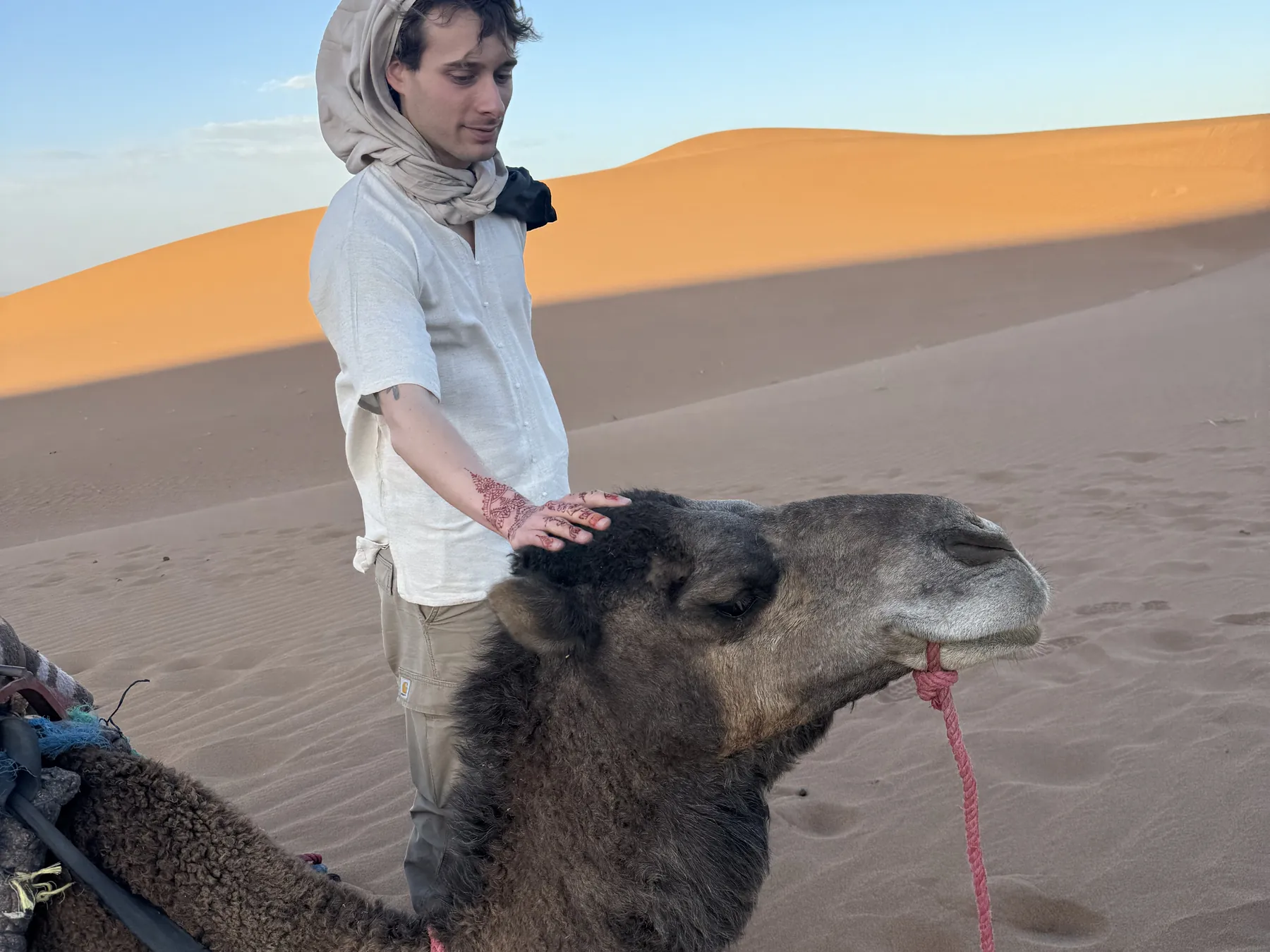
Crossing the dunes at walking pace, riding a camel or walking beside one.

- Kind of experience
- Desert and camel experiences
Camel riding is the oldest way of travelling through the Moroccan desert, and still the quietest. There is no engine and no road to follow: the camels pick their way over the sand, their stride sets the pace, and the landscape changes slowly enough to be noticed.
Trekking is the same journey on foot. Walking beside the camels rather than riding suits travellers who prefer to keep their feet on the ground, and many people combine the two.
The camel in the Sahara
The camels of Morocco are dromedaries, the one-humped camel of North Africa and the Middle East. For centuries they made life in the Sahara possible: they carried salt, grain and goods on the caravan routes that linked Morocco with the lands south of the desert, and they remain part of life in the desert regions today. Riding one, even briefly, connects a journey to that long history of travel across the sand.
What riding a camel is like
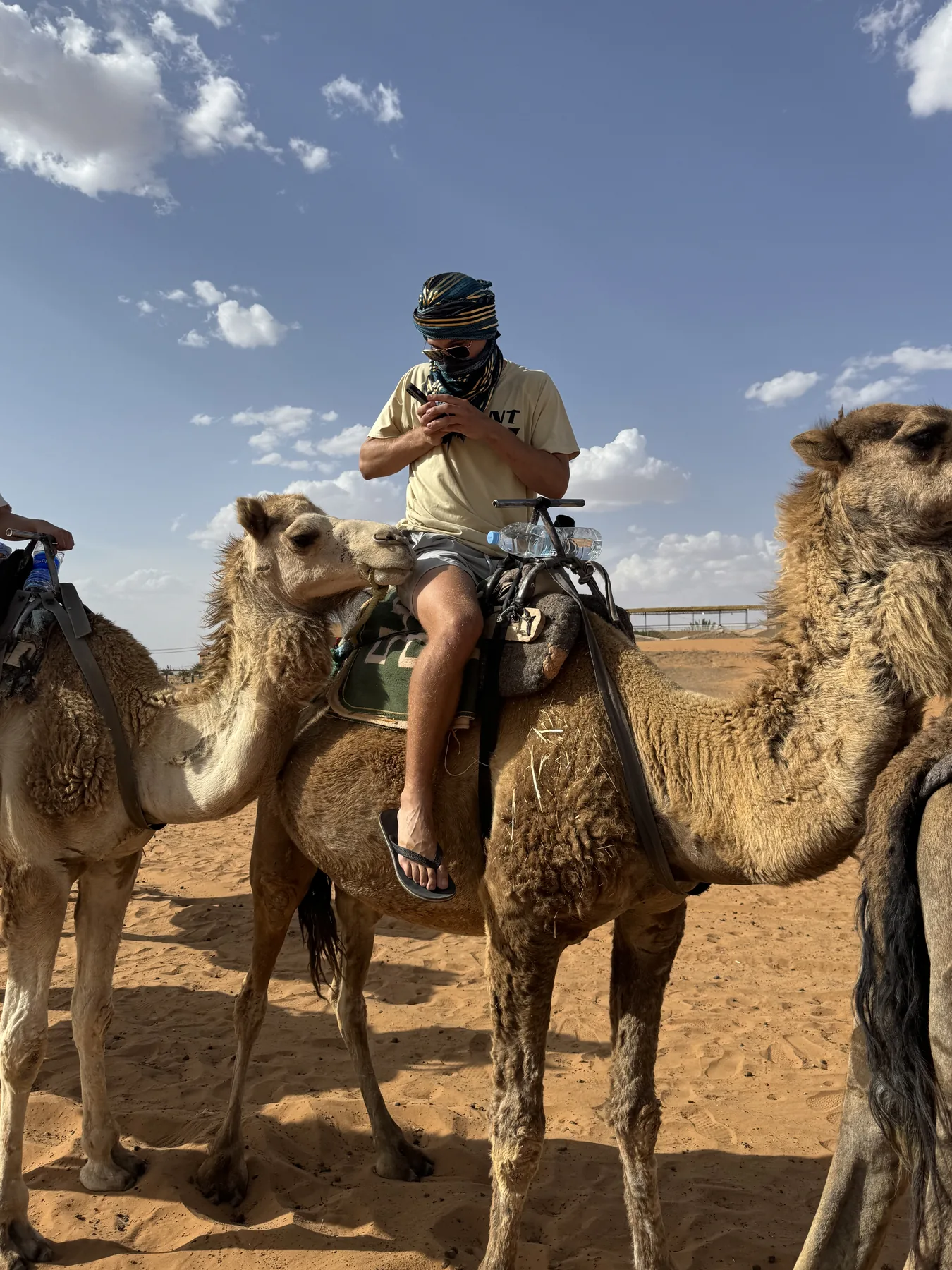
A camel kneels to be mounted and stands up in two movements, back legs first, so the first moment tips you forward before it levels out. Once it is moving, the gait is a slow, rolling sway that is easier to relax into than to resist. Getting down reverses the movement, so it helps to lean back as the camel kneels.
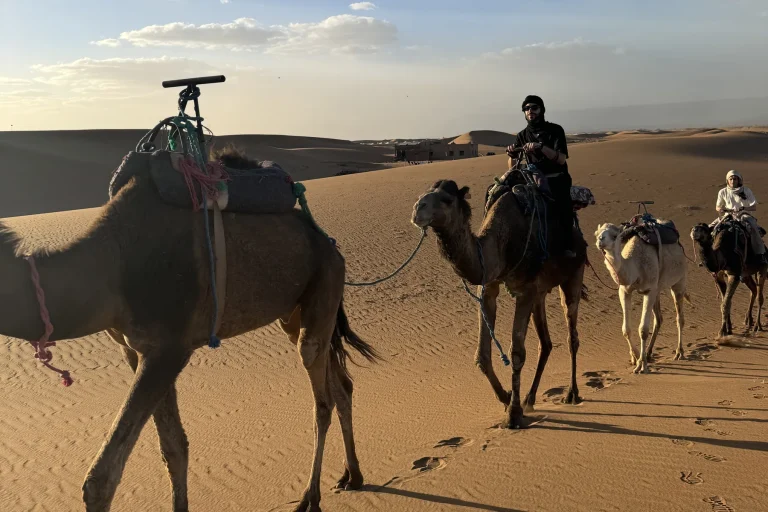
High on a camel’s back, the view opens across the dunes, and the quiet is striking: the soft sound of feet in sand, the creak of a saddle, the wind.
How it fits into a journey
Camel riding belongs to the desert chapters of a route rather than to a city stay. It comes where the road gives way to sand, and on a journey south from Marrakech it is less a separate activity than the way the desert part of the trip begins.
Where it takes place on our journeys
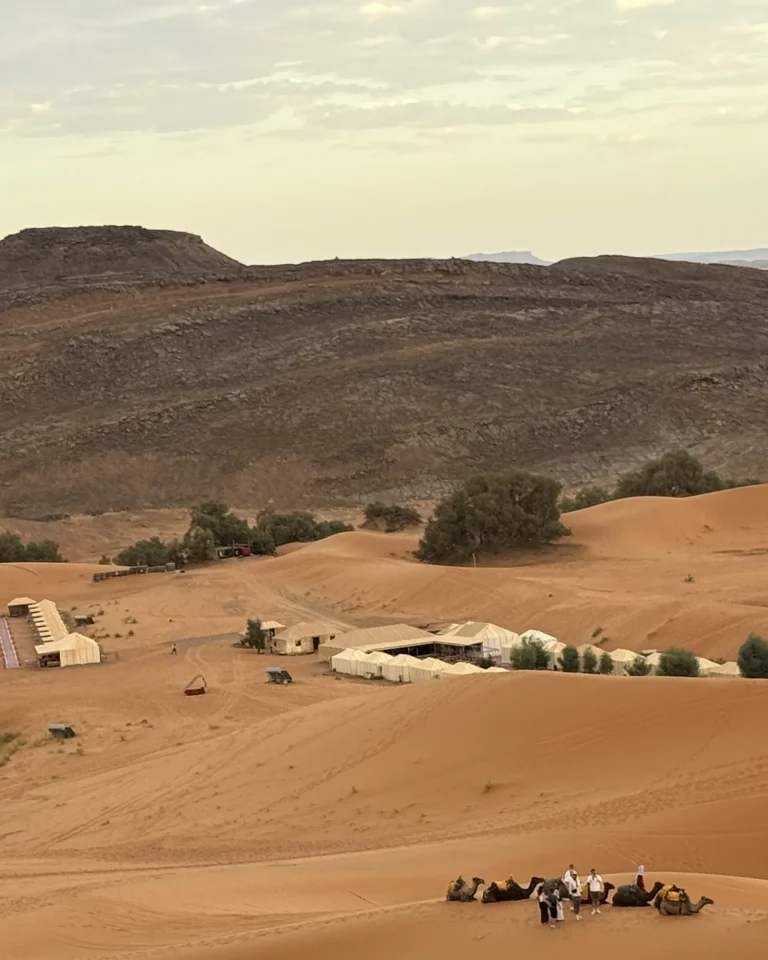
Two Morocco Passage journeys include it: in Erg Chebbi, the sea of high dunes beside the village of Merzouga, and at Zagora in the Draa Valley, at the end of a shorter route south. Other places are still being confirmed.
Journeys that include this experience
Marrakech to Merzouga Private Sahara Journey — 3 Days
- Marrakech
- Ouarzazate
- Dades Valley
- Erg Chebbi
- Marrakech
and 6 more places on the way

Marrakech to Zagora Private Desert Journey — 2 Days
- Marrakech
- Ouarzazate
- Zagora
- High Atlas Mountains
- Marrakech
and 5 more places on the way
Erg Chebbi or Zagora?
The experience changes with the landscape. In Erg Chebbi, on the three-day route, the camels move through a true sand sea of high, wind-shaped dunes. At Zagora, on the two-day route, the setting is the edge of the desert where the palm groves of the Draa meet stony ground and smaller areas of sand. Both are real desert; Erg Chebbi is the one for high dunes.
What to wear
- Clothing. Loose clothes that cover the legs make riding more comfortable.
- Sun and sand. A scarf or head covering protects against sun and wind-blown sand, and sunglasses help in the glare.
- Shoes. Closed shoes or sandals that stay on are easier for walking in sand than flip-flops.
- Layers. In winter, desert evenings and mornings are cold, so a warm layer is worth having.
Riding with care for the animals
Many travellers want to know that the camels they ride are well treated. Signs of good care are easy to notice: animals that look healthy and alert, have access to shade and water, and carry saddles that are padded and properly fitted. If anything about an animal’s condition concerns you, it is always reasonable to say so.
Questions travellers ask
Is camel riding comfortable?
For most people, yes, once they relax into the swaying rhythm. The moments of standing up and kneeling down are the most unusual part.
Can I walk instead of riding?
Yes. Walking beside the camels is the trekking version of the same experience, and many travellers combine riding and walking.
Which journeys include camel riding?
The three-day route to Merzouga and Erg Chebbi and the two-day route to Zagora. On both, camel riding is part of the desert stop.
Can camel riding be arranged near Marrakech?
Other places are still being confirmed, and none of our journeys near Marrakech includes it at present. If it matters to you, mention it when you plan.